STATWERKS

Free, no login

Every model dashboard is free to read — known issues, pricing context, and a buying checklist, no account required.

Browse dashboards →
997.2

997.2 GT3

2010–2011 · 2dr coupe

A purist's naturally aspirated 911 from the same chassis generation as the DFI-powered Carrera — the last GT3 to use the Mezger engine before the 991 generation switched architectures. Track-focused, rear-wheel drive only, manual-only, from a short run of just 2,256 units. The Mezger engine has a strong reliability reputation even under hard track use when properly maintained — 'near bulletproof' is a common description in ownership discussion. There's no documented engine-specific failure pattern beyond the platform-wide watch items (centerlock recall, front-axle-lift reliability if equipped, RMS weep).

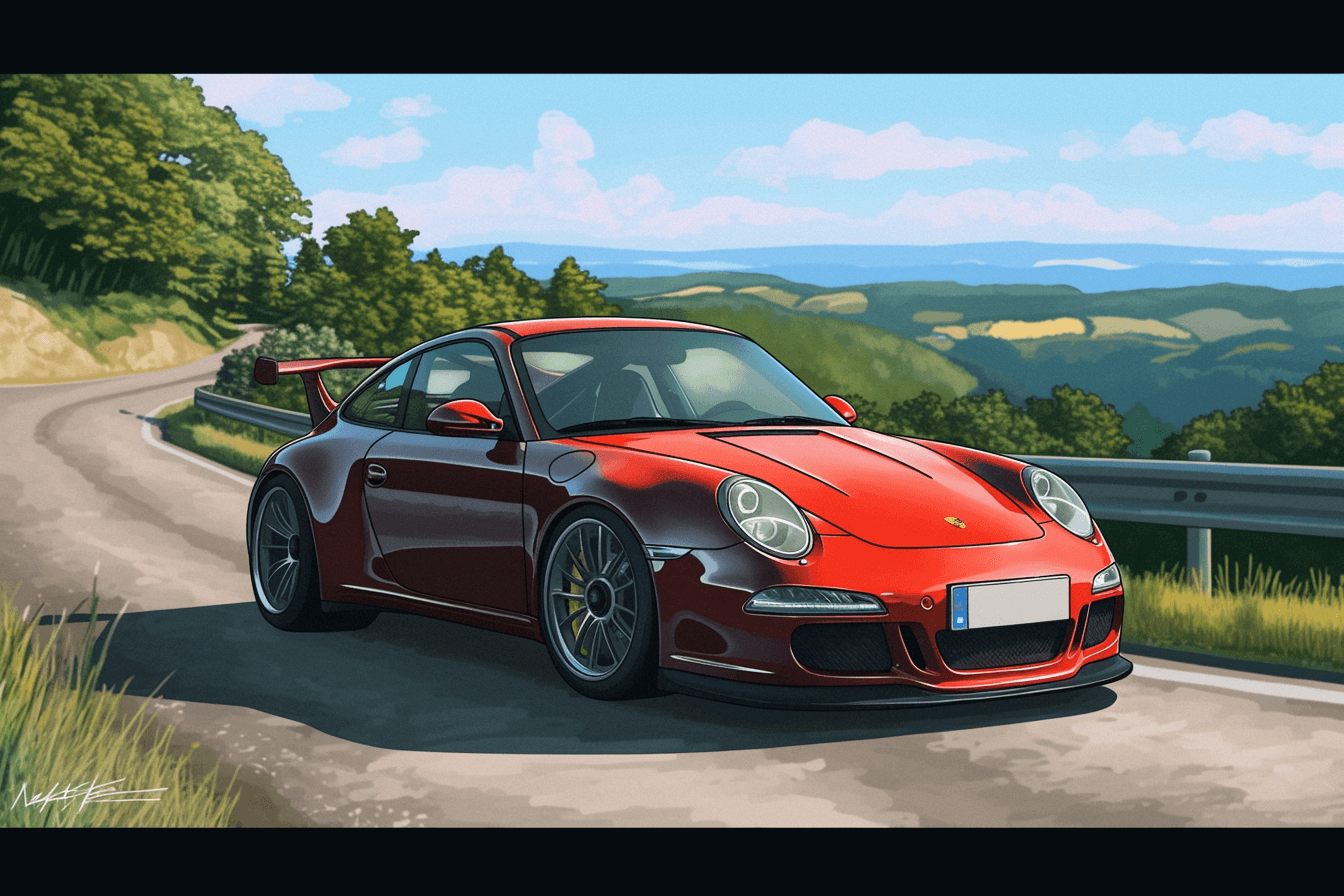
997.2 GT3, red, three-quarter front view, parked on a mountain road
00

Overview

Production
2010–2011
Chassis code
997.2
Layout
Rear-engine, RWD
Engine code
Mezger 3.8L (motorsport-derived)
Power
435 hp @ 7,600 rpm
Torque
317 lb-ft @ 6,250 rpm
0–62 mph
~4.1s
Transmission
6-speed manual only
Curb weight
3,075 lb

Known-issue mix

  • 3Watch
  • 3Clear
01

Known issues

Watch

Centerlock wheel hub recall (build-window specific)

NHTSA campaign 11V285000 covers cars built May 15, 2009 – February 11, 2010 (455 units) — in rare circumstances the rear wheel hub or bearing could break, risking loss of control; Porsche replaced hubs free of charge and revised the maintenance schedule. A separate June 2011 recall covered 1,702 911s with centerlock wheels for a locking-mechanism design flaw that could cause premature hub wear. These are two distinct recalls, not one — confirm completion of both via VIN if the car has centerlock wheels.

What to check

  • Run the VIN through Porsche's recall lookup to confirm completion of NHTSA campaign 11V285000 if the build date falls in the May 2009–Feb 2010 window
  • Confirm completion of the separate June 2011 centerlock hub-wear recall as well
  • Get documented confirmation rather than taking a seller's word for it
Watch

Front-axle lift system failure (on cars so equipped)

The optional front-axle lift system (option code I474) raises the nose about 30mm for clearing driveways and speed bumps, but it's a well-documented weak point. Common symptoms: the system raises the nose but won't lower it again, or operates intermittently. Repair estimates range roughly €3,000–€18,000 depending on what's failed, with a replacement pump alone running around £8,000 from some specialists. Only relevant to cars actually equipped with the option, but since it's one of the more desirable specs to shop for, it's worth testing thoroughly rather than assuming it works because the car looks clean.

What to check

  • If equipped, raise and lower the front-axle lift system multiple times during the test drive
  • Watch for it failing to lower fully, or operating intermittently
  • Budget for a real chance of an expensive repair even on a system that tests fine at the moment of purchase
Watch

Rear main seal (RMS) weep

Same wear-item profile seen across most water-cooled 911 generations: the rear main seal can weep oil over time, particularly noticeable after the car has been parked for a while. Porsche considers a few drops per day normal, and many specialists recommend waiting to address a minor weep until clutch replacement time, since the transmission is already out for that job anyway.

What to check

  • Inspect the rear main seal area — the engine/transmission junction — for oil seepage
  • Ask about any oil spots left under the car when it's parked, and how long the car typically sits between drives
Clear

IMS bearing — not applicable to this engine family

Worth stating explicitly since many buyers researching any 911 from this era carry IMS bearing concerns over from the M96/M97-engined Carrera/Boxster/Cayman lineup. The Mezger engine technically has an intermediate shaft too, but it's a fundamentally different, more robust design — oil-pressure-fed plain bearings on both ends rather than a sealed ball bearing that can fail without warning. This is the same engine family used in the 996/997 Turbo and GT2, none of which carry IMS bearing risk either.

What to check

  • None needed — if a seller or shop tries to sell you an "IMS inspection" on a Mezger-engined GT3, that's a red flag about them, not the car
Clear

Stiff clutch / balky cold engagement — a character trait, not a defect

Worth knowing before buying one as a daily driver rather than discovering it on the test drive and assuming something's wrong: the 997.2 GT3's clutch is deliberately heavy, and combined with the standard dual-mass flywheel it can be reluctant to engage smoothly when cold or crawling in traffic. The heavy pedal effort makes more sense once the car is warmed up and driven the way it's meant to be driven. Not a failure mode, not something a PPI needs to flag as a defect — just genuine GT3 character.

What to check

  • Drive the car cold and judge clutch feel against this expectation, not against a Carrera's
  • Don't mistake normal stiffness for a failing clutch — assess actual engagement point and any slip/judder separately
Clear

No dominant engine-specific failure pattern beyond platform-wide items

'Near bulletproof' is a common description of this engine in ownership and reliability discussion, even accounting for GT3s typically being driven hard. The documented watch items (centerlock hub recall, front-axle-lift reliability on cars so equipped, RMS weep) are platform-wide rather than an engine-specific weak point. No documented bore-scoring concern turned up for this engine family in this research pass, unlike the M96/M97/9A1 engine family conversation that applies to Carrera models from either generation.

What to check

  • Treat this as a standard, thorough PPI rather than one targeting a known engine-specific failure
  • Review the platform-wide watch items (centerlock recall, front-axle lift, RMS, clutch feel) as your checklist baseline
02

Market pricing context

Typical asking price
$120,000 – $220,000
clean, good-condition examples with unremarkable track history

Average sale price sits around $166,600 — substantially pricier than the Carrera S trims from the same chassis generation, reflecting the GT3's low production volume (2,256 units total) and status as the last Mezger-engined GT3. The lowest recorded sale is $86,000 (2010 model year, March 2024), and the highest is $278,993 (2011 model year, November 2023) — treat both as edges of the range rather than typical shopping targets, since a low sale price on a GT3 often correlates with hard track use or accident history rather than simple depreciation. For comparison, the 997.2 GT3 RS runs meaningfully higher still (~$294,900 average), reflecting its added rarity and performance focus. Compiled from classic.com aggregate sale data — not live/real-time pricing.

As of August 2026 — written market commentary, not live pricing data

Price range

Shaded band = typical range shown above · marker = average sale

$166,604Average
$86,000Record low · 2010 model year, March 2024 sale — mileage not specified
$278,993Record high · 2011 model year, November 2023 sale
03

Popular options

Clubsport Package

Adds a rear roll cage, lightweight bucket seats sourced from the Carrera GT, harness belts, and a fire extinguisher. Named as one of the standout desirable specs for this generation in specialist buying guides — track-focused mods like this have been cited as boosting a car's value. That said, some buyers specifically prefer the more practical standard "Comfort" specification for daily usability, so treat this as a genuine preference split, not a universal must-have.

Popular

PCCB (Porsche Ceramic Composite Brakes)

An exclusive GT3-spec version of Porsche's ceramic-composite brakes, priced close to $8,000 when new. Named alongside the Clubsport package and front-axle lift as one of the most desirable specs to look for — saves roughly 10kg of unsprung weight per corner and offers fade-free track performance. The tradeoff: PCCB discs don't last forever and are expensive to replace, and converting back to steel brakes has been estimated at around £5,000 — factor rotor condition into your offer on a PCCB-equipped car.

Popular

Front-axle lift system

Raises the front of the car roughly 30mm — useful for driveways and speed bumps that would otherwise scrape the GT3's low front splitter. Named as one of the most desirable specs for this generation, but see the platform-level known issue: this option has a well-documented, unusually high failure rate, with repairs running well into four figures. Desirable to have, but budget for the real chance it needs expensive attention.

Popular

These three options (Clubsport package, PCCB, front-axle lift) are specifically and consistently named together across specialist buying guides as the standout desirable specs for a used 997.2 GT3 — this list is intentionally short and high-confidence rather than padded with every factory option code.

04

Buying checklist

Documents to request

  • Full service history — independent Porsche GT specialist or OPC (official Porsche Centre) preferred over generic shop records
  • VIN-based recall confirmation from Porsche — both the 2009–2010 centerlock hub recall (11V285000) and the separate June 2011 centerlock hub-wear recall, if the car has centerlock wheels
  • Track-day/PPI history if available — GT3s are commonly tracked, which affects wear items more than mileage alone

Questions for the seller

  • Have both centerlock hub recalls been completed, if this car has centerlock wheels?
  • Is the car equipped with the front-axle lift system, and has it ever needed repair?
  • Any oil spots under the car, particularly near the engine/gearbox junction?
  • Has this car seen track use, and if so, how often?
  • Has this car seen track use, and if so how often? GT3s are commonly tracked, which affects clutch, brake, and tire wear more than mileage alone.

PPI advice

  • Confirm no IMS bearing concern applies — this is a Mezger engine; don't pay for an "IMS inspection" upsell
  • If equipped, test the front-axle lift system thoroughly — raise and lower it multiple times
  • Inspect the rear main seal area for oil seepage
  • Drive the car cold and expect clutch stiffness/balkiness — normal GT3 character, not a fault, but assess engagement point and any slip separately
  • Use a shop that specializes in Porsche GT cars specifically, not just Porsche generally
  • If PCCB-equipped, inspect disc wear and get a sense of remaining service life before finalizing price — replacement is expensive
  • Check clutch engagement point and flywheel condition given this generation's typically harder use than a Carrera