STATWERKS

Free, no login

Every model dashboard is free to read — known issues, pricing context, and a buying checklist, no account required.

Browse dashboards →
997.2

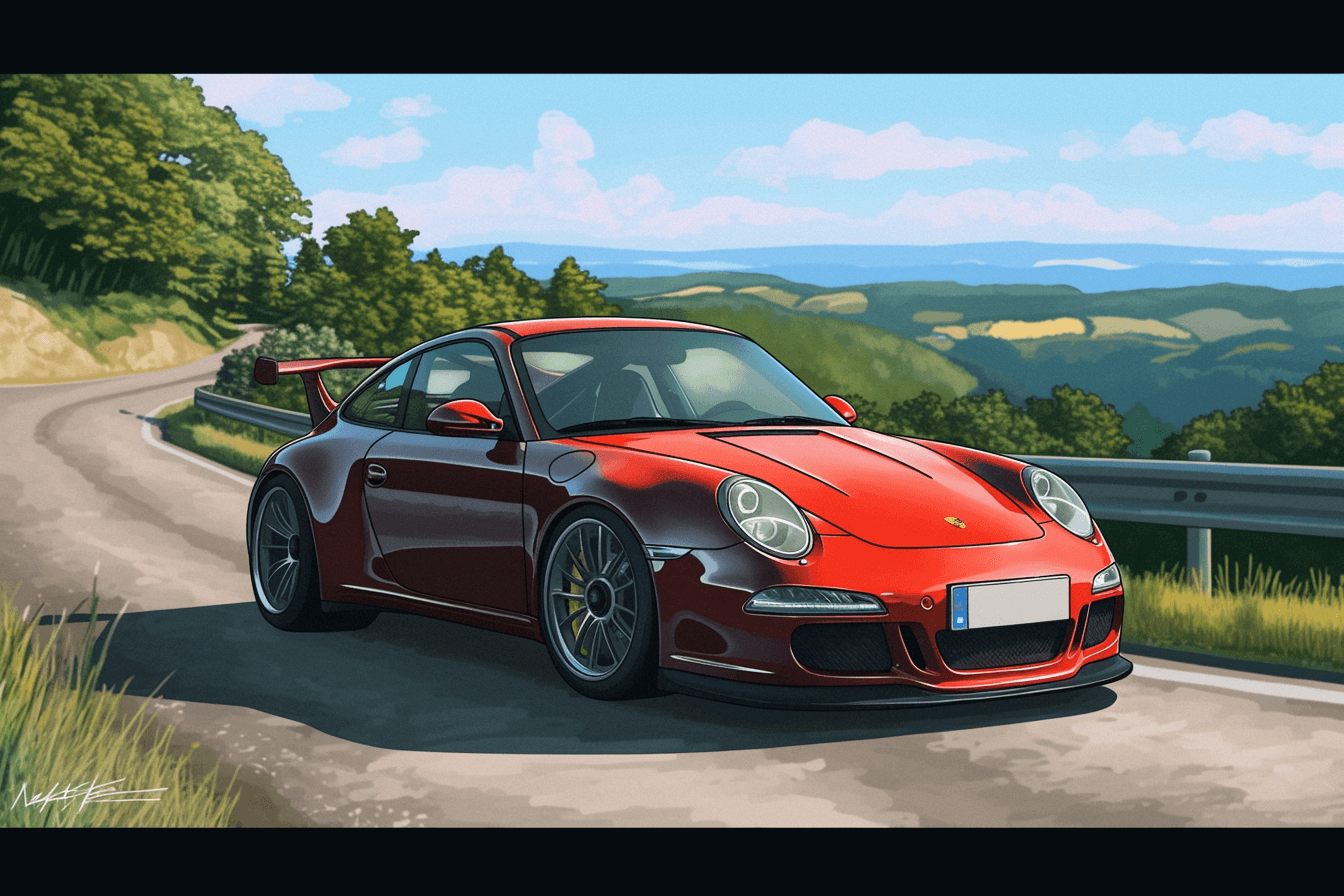
997.2 GT3

2010–2011 · 2dr coupe

The 997.2 GT3 shares its chassis generation with the 997.2 Carrera, but it isn't mechanically related to it the way a Carrera trim would be — it's powered by a completely different, motorsport-derived Mezger engine rather than the Carrera's 9A1 direct-injection unit, and it's the last GT3 generation to use that engine before the 991 generation switched architectures entirely. Widely regarded as one of the best naturally aspirated GT3s: track-focused, rear-wheel drive only, manual-only (PDK didn't arrive on GT3 until the 991 generation), from a short, low-volume run of just 2,256 units built across the 2010–2011 model years. Critically for buyers coming from IMS-bearing-era research: the Mezger engine's intermediate shaft runs on oil-pressure-fed plain bearings rather than the sealed ball bearing design that causes M96/M97 IMS failures — GT3, Turbo, and GT2 models across the 996 and 997 generations simply aren't affected by that failure mode. Every 997.2 GT3 shares the same recall history, front-axle-lift behavior (on cars so equipped), and RMS wear pattern — engine-displacement-specific detail doesn't apply here since there's only the one GT3 spec.

Two 997.2 GT3 cars, white, parked on a wooded roadside pull-off
00

Overview

Production
2010–2011
Chassis code
997.2
Layout
Rear-engine, RWD
01

Choose a trim

02

Known across every trim

These apply platform-wide, regardless of trim. Each trim's own dashboard adds anything specific to that engine/spec variant.

Watch

Centerlock wheel hub recall (build-window specific)

NHTSA campaign 11V285000 covers cars built May 15, 2009 – February 11, 2010 (455 units) — in rare circumstances the rear wheel hub or bearing could break, risking loss of control; Porsche replaced hubs free of charge and revised the maintenance schedule. A separate June 2011 recall covered 1,702 911s with centerlock wheels for a locking-mechanism design flaw that could cause premature hub wear. These are two distinct recalls, not one — confirm completion of both via VIN if the car has centerlock wheels.

What to check

  • Run the VIN through Porsche's recall lookup to confirm completion of NHTSA campaign 11V285000 if the build date falls in the May 2009–Feb 2010 window
  • Confirm completion of the separate June 2011 centerlock hub-wear recall as well
  • Get documented confirmation rather than taking a seller's word for it
Watch

Front-axle lift system failure (on cars so equipped)

The optional front-axle lift system (option code I474) raises the nose about 30mm for clearing driveways and speed bumps, but it's a well-documented weak point. Common symptoms: the system raises the nose but won't lower it again, or operates intermittently. Repair estimates range roughly €3,000–€18,000 depending on what's failed, with a replacement pump alone running around £8,000 from some specialists. Only relevant to cars actually equipped with the option, but since it's one of the more desirable specs to shop for, it's worth testing thoroughly rather than assuming it works because the car looks clean.

What to check

  • If equipped, raise and lower the front-axle lift system multiple times during the test drive
  • Watch for it failing to lower fully, or operating intermittently
  • Budget for a real chance of an expensive repair even on a system that tests fine at the moment of purchase
Watch

Rear main seal (RMS) weep

Same wear-item profile seen across most water-cooled 911 generations: the rear main seal can weep oil over time, particularly noticeable after the car has been parked for a while. Porsche considers a few drops per day normal, and many specialists recommend waiting to address a minor weep until clutch replacement time, since the transmission is already out for that job anyway.

What to check

  • Inspect the rear main seal area — the engine/transmission junction — for oil seepage
  • Ask about any oil spots left under the car when it's parked, and how long the car typically sits between drives

Clear

IMS bearing — not applicable to this engine family

Worth stating explicitly since many buyers researching any 911 from this era carry IMS bearing concerns over from the M96/M97-engined Carrera/Boxster/Cayman lineup. The Mezger engine technically has an intermediate shaft too, but it's a fundamentally different, more robust design — oil-pressure-fed plain bearings on both ends rather than a sealed ball bearing that can fail without warning. This is the same engine family used in the 996/997 Turbo and GT2, none of which carry IMS bearing risk either.

What to check

  • None needed — if a seller or shop tries to sell you an "IMS inspection" on a Mezger-engined GT3, that's a red flag about them, not the car
Clear

Stiff clutch / balky cold engagement — a character trait, not a defect

Worth knowing before buying one as a daily driver rather than discovering it on the test drive and assuming something's wrong: the 997.2 GT3's clutch is deliberately heavy, and combined with the standard dual-mass flywheel it can be reluctant to engage smoothly when cold or crawling in traffic. The heavy pedal effort makes more sense once the car is warmed up and driven the way it's meant to be driven. Not a failure mode, not something a PPI needs to flag as a defect — just genuine GT3 character.

What to check

  • Drive the car cold and judge clutch feel against this expectation, not against a Carrera's
  • Don't mistake normal stiffness for a failing clutch — assess actual engagement point and any slip/judder separately