STATWERKS

Free, no login

Every model dashboard is free to read — known issues, pricing context, and a buying checklist, no account required.

Browse dashboards →
997.2

997.2 Carrera S

2009–2012 · 2dr coupe / cabriolet

The S steps up from base Carrera's 3.4L to a 3.8L version of the same direct-injection engine, up from 355 hp on the 997.1 Carrera S to 385 hp here — a meaningful power increase alongside the reliability improvements. Wider rear track, larger brakes, and 19-inch wheels come standard versus the base Carrera. It's the trim most cross-shopped against a 997.1 Carrera S of similar age — same rough money, without the IMS bearing question and at a meaningfully lower bore-scoring rate, though not a zero one. Specialist consensus describes it as a polished evolution with little going wrong beyond general wear and the platform-wide watch items. Many enthusiasts consider it the 'sweet spot' of the 997 lineup for exactly that reason.

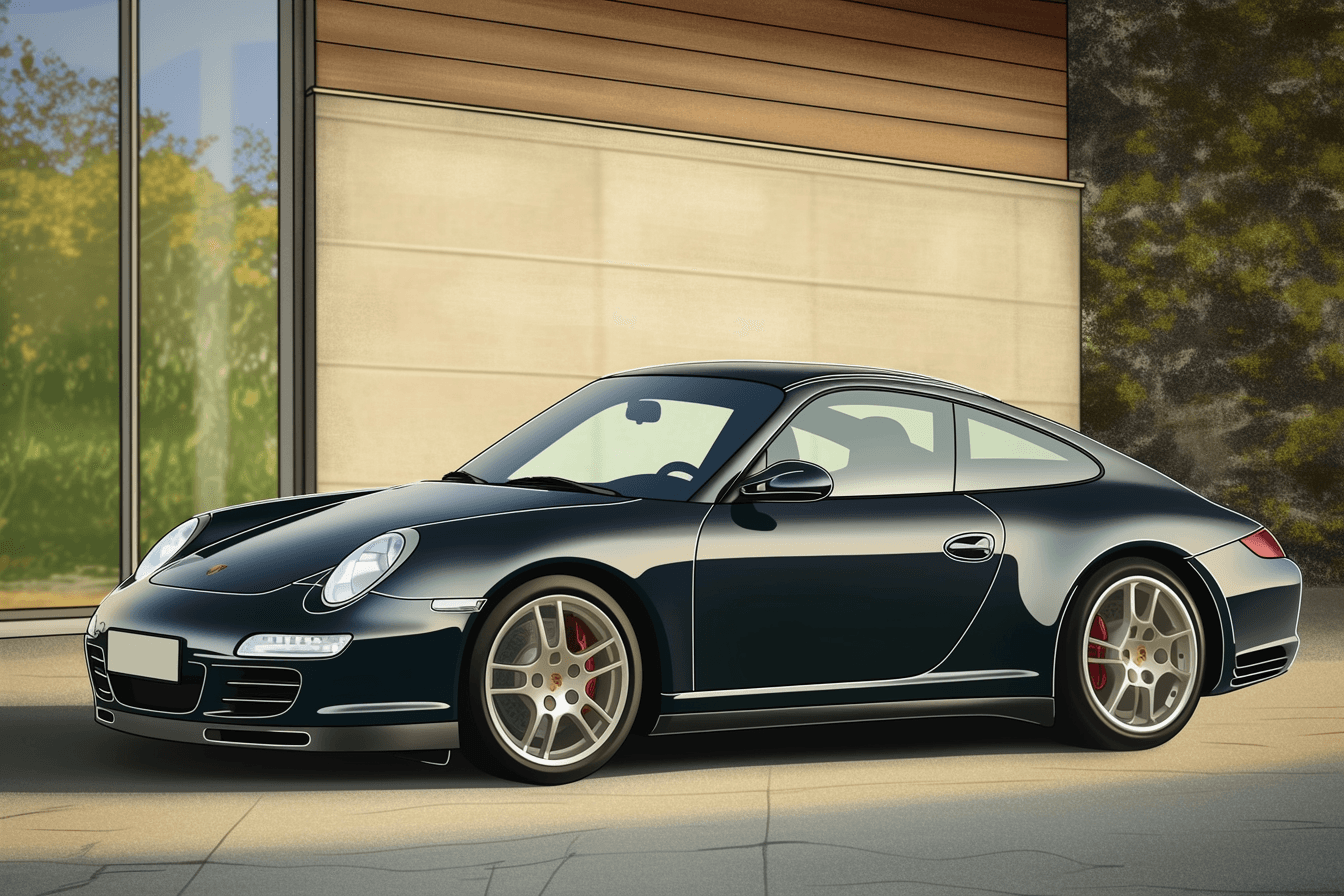
997.2 Carrera S, dark blue, three-quarter front view, parked in front of a modern house
00

Overview

Production
2009–2012
Chassis code
997.2
Layout
Rear-engine, RWD
Engine code
9A1 (DFI)
Power
385 hp @ 6,500 rpm
Torque
310 lb-ft @ 4,400 rpm
0–60 mph
4.3s (PDK w/ Sport Chrono)
Transmission
6MT or 7-speed PDK
Curb weight
3,208–3,274 lb

Known-issue mix

  • 6Watch
  • 2Clear
01

Known issues

Watch

Bore scoring — reduced risk versus 997.1, but not eliminated

Bore scoring on the 997.1's M97 engines is tied to intermediate-shaft-related causes; the 9A1's version is different — cylinder bore shrinkage or breakdown of the aluminum-silicon cylinder coating — but it is a documented failure mode, not a solved problem, even though specialist and owner consensus puts the failure rate meaningfully below the M97's. Symptoms are the same as on earlier engines: rising oil consumption and blue smoke on a cold start, with a confirmed case meaning a shortblock rebuild or replacement. More frequent oil changes using a moly-additive oil are commonly recommended as a preventative measure.

What to check

  • Get a borescope inspection of all six cylinder bores during PPI — don't skip this just because it's a direct-injection engine
  • Cold start the car yourself and listen for excessive piston slap or rattle that clears within ~30 seconds
  • Ask about oil-change intervals and whether a moly-additive oil has been used
Watch

High-pressure fuel pump (HPFP) failure

The HPFP can fail with no reliable warning signs beforehand, causing limp mode or a complete shutdown. Most affected pumps were replaced under a Porsche product update/warranty action in the years since introduction, but it's worth confirming specifically rather than assuming — especially on early (2009) model-year cars, which saw the most reports.

What to check

  • Ask specifically whether the HPFP has been replaced or inspected, especially on early (2009) model-year cars
  • During a test drive, watch for hesitation, limp mode, or any sudden loss of power
  • Ask whether any Porsche product update or warranty action covering the HPFP was performed on this car
Watch

Occasional coolant leaks

Not a defining risk the way coolant crossover pipes are on some earlier generations, but coolant leaks do turn up occasionally on the 9A1 engine. Worth a cooling-system check during PPI regardless of how clean the car looks.

What to check

  • Check the cooling system for leaks or evidence of prior repairs
  • Ask about any history of coolant loss, a coolant smell, or an overheating warning
Watch

Rear main seal (RMS) leaks

The rear main seal can weep oil over time on this engine family, same as the 997.1. It's a wear item, not a design flaw specific to the 997.2, and rarely a deal-breaker on its own — but it's easy to check for and worth confirming before you buy.

What to check

  • Inspect the rear main seal area — the engine/transmission junction — for oil seepage
  • Ask about any oil spots left under the car when it's parked
Watch

Suspension spring issues

Not a dominant failure pattern specific to the 997.2, but a known watch item across the 997 generation broadly. Worth including as a standard PPI line item rather than treating as a car-specific red flag.

What to check

  • Have the suspension inspected during PPI, including spring condition
  • Ask whether any suspension components have been replaced, and why
Watch

LED rear light unit condensation

The 997.2's facelifted LED tail lights — an upgrade from the 997.1's halogen units — use a sealed housing that can develop condensation inside over time. It's a cosmetic/inspection issue rather than a safety-critical one, but worth a quick visual check since a failed unit means a housing replacement.

What to check

  • Visually check both LED tail light housings for internal condensation or moisture
  • Ask if either tail light unit has ever been replaced
Clear

IMS bearing — not applicable to this generation

The intermediate shaft bearing that drives so much of the 997.1 (and earlier water-cooled 911) ownership conversation was designed out entirely with the 9A1 direct-injection engine. This is the single biggest reliability improvement over the 997.1, and worth stating explicitly since many buyers researching 911s carry IMS concerns over from earlier generations that simply don't apply here.

What to check

  • None needed — if a seller or shop tries to sell you an "IMS inspection" on a 997.2, that's a red flag about them, not the car
Clear

No dominant trim-specific failure pattern beyond platform-wide items

Independent Porsche specialist shops consistently describe the 997.2 Carrera S as a well-sorted car by the time it reached production. The HPFP, coolant, rear main seal, and bore scoring items covered on the platform page are the closest things to known watch-points here — bore scoring in particular is real, even though it's meaningfully less common on the 9A1 than it was on the 997.1's M97, and shouldn't be treated as a solved problem just because this is a direct-injection design. This is still a meaningfully lower-risk buy than a 997.1 from a pure mechanical standpoint, which is worth reflecting in how firmly you should expect to negotiate on price versus a 997.1 example — but "lower-risk" isn't "no-risk," and a borescope result during PPI should factor directly into your offer.

What to check

  • Get a borescope inspection of the cylinder bores during PPI — don't skip this just because it's a DFI engine
  • Review the platform-wide watch items (HPFP, coolant, RMS, bore scoring, suspension, LED tail lights) as your checklist baseline
02

Market pricing context

Typical asking price
$48,000 – $75,000
clean, good-condition examples, PDK or manual

Average sale price sits around $59,300, with PDK coupes averaging roughly $57,400 — manual cars tend to command a premium. Rough or high-mile examples have traded as low as $22,750 (a 2009 model-year car), and a well-documented 2009 example reached $120,000 at a December 2022 sale — treat both ends as outliers rather than shopping targets. Runs a meaningful premium over the 997.1 Carrera S (averaging roughly $47,400) — the direct-injection engine's reliability improvements and higher output are generally reflected in the price gap.

As of August 2026 — written market commentary, not live pricing data

Price range

Shaded band = typical range shown above · marker = average sale

$59,339Average
$22,750Record low · 2009 model year
$120,000Record high · 2009 model year, December 2022 sale
03

Popular options

6-speed manual transmission

Widely considered the most sought-after configuration of this generation and consistently commands a premium over PDK — even though PDK is objectively quicker. Increasingly hard to find as the used market thins out.

Popular

Sport Chrono Package

Near-essential on PDK cars (unlocks launch control and sharper throttle mapping) and a strong nice-to-have on manuals. A meaningful resale booster, though one forum estimate put the premium at roughly what a dealer retrofit costs ($1,500) — close to a wash to add later, but factory-original examples are still preferred.

Popular

PSE (Porsche Sport Exhaust)

A switchable exhaust mode (quiet/loud), mostly found on 2010+ cars — delayed on most 2009 models. Widely cited as one of the most desirable options for a naturally aspirated 911, specifically for the sound.

Popular

Sport seats

Consistently named alongside Sport Chrono and PSE as a top desirability driver in buyer discussions.

Popular

Sport PASM (SPASM)

New to the 997.2, replacing the earlier "Minus 20" sport suspension package — lowers the car a further 10mm beyond standard PASM with firmer springs, and bundles in a rear limited-slip differential on rear-wheel-drive cars. Coupe-only. Priced at just $950 when new, making it one of the more affordable desirable options to look for.

Popular

Limited-slip differential (LSD)

Called out in specialist buying guides as a desirable option that helps a car hold value. On rear-wheel-drive coupes it comes bundled with Sport PASM rather than standalone — check for Sport PASM specifically. Standard equipment on Carrera 4S (AWD) cars.

Popular

PCCB (Porsche Ceramic Composite Brakes)

A roughly $8,000 factory option, uncommon on non-Turbo/non-GT3 cars. Desirable for non-track use, but rare enough that it shouldn't be expected — a nice find rather than something to hold out for.

Rare

PASM (adaptive suspension)

Standard equipment on the Carrera S — the optional upgrade on the base Carrera. Not something to seek out separately here, since every S already has it.

Standard

Not everyone agrees options move resale much on a car this age — one long-running forum thread argues that by the time a 997.2 is 15+ years old, extras like Sport Chrono add "almost nothing" to resale value the way they might on a newer car. The tags above reflect what buyers commonly seek out and specialists commonly recommend, not a guaranteed price premium — factor it into desirability and how quickly a car sells, not as a fixed dollar amount.

04

Buying checklist

Documents to request

  • Full service history — independent Porsche specialist or OPC (official Porsche Centre) records preferred over generic shop records, including annual oil changes at minimum
  • Records of any HPFP, coolant, or rear main seal work
  • Title history / accident or salvage check (Carfax or equivalent)

Questions for the seller

  • Has the HPFP ever been replaced or inspected, especially if this is an early (2009) model-year car?
  • Any history of coolant loss, a coolant smell, or an overheating warning?
  • Any oil spots under the car, particularly near the engine/gearbox junction?
  • Has a pre-purchase inspection ever been done, and can you share the results?
  • Manual or PDK? PDK was new to this generation and is generally well-regarded, but transmission type materially affects resale demand and driving character.

PPI advice

  • Confirm no IMS bearing concern applies — don't pay for or accept an "IMS inspection" upsell on this generation, since the 9A1 has no intermediate shaft
  • Get a borescope inspection of the cylinders during PPI — bore scoring is a documented, real risk on this engine (lower rate than the 997.1's M97, but not eliminated)
  • Cold start test: listen for metallic ticking or knocking in the first ~30 seconds that fades as the engine warms
  • Check the cooling system for leaks or evidence of prior repairs
  • Inspect the rear main seal area for oil seepage, and the LED tail light housings for internal condensation
  • Use a shop that specializes in Porsche, not a generic mechanic
  • Budget for the PPI even on a car you're excited about — treat it as non-negotiable, not optional