STATWERKS

Free, no login

Every model dashboard is free to read — known issues, pricing context, and a buying checklist, no account required.

Browse dashboards →
991.1

991.1 Carrera S

2012–2016 · 2dr coupe / cabriolet

The most popular 911 variant globally, per market data, and the last naturally aspirated Carrera S before the 991.2 brought turbocharging. Widely seen as the generation where the 911 became noticeably more refined and modern without losing the character of the naturally aspirated flat-six. There's no widely documented catastrophic mechanical weak point specific to this trim beyond the platform-wide watch items — this generation is generally regarded as one of the more reliable in recent 911 history.

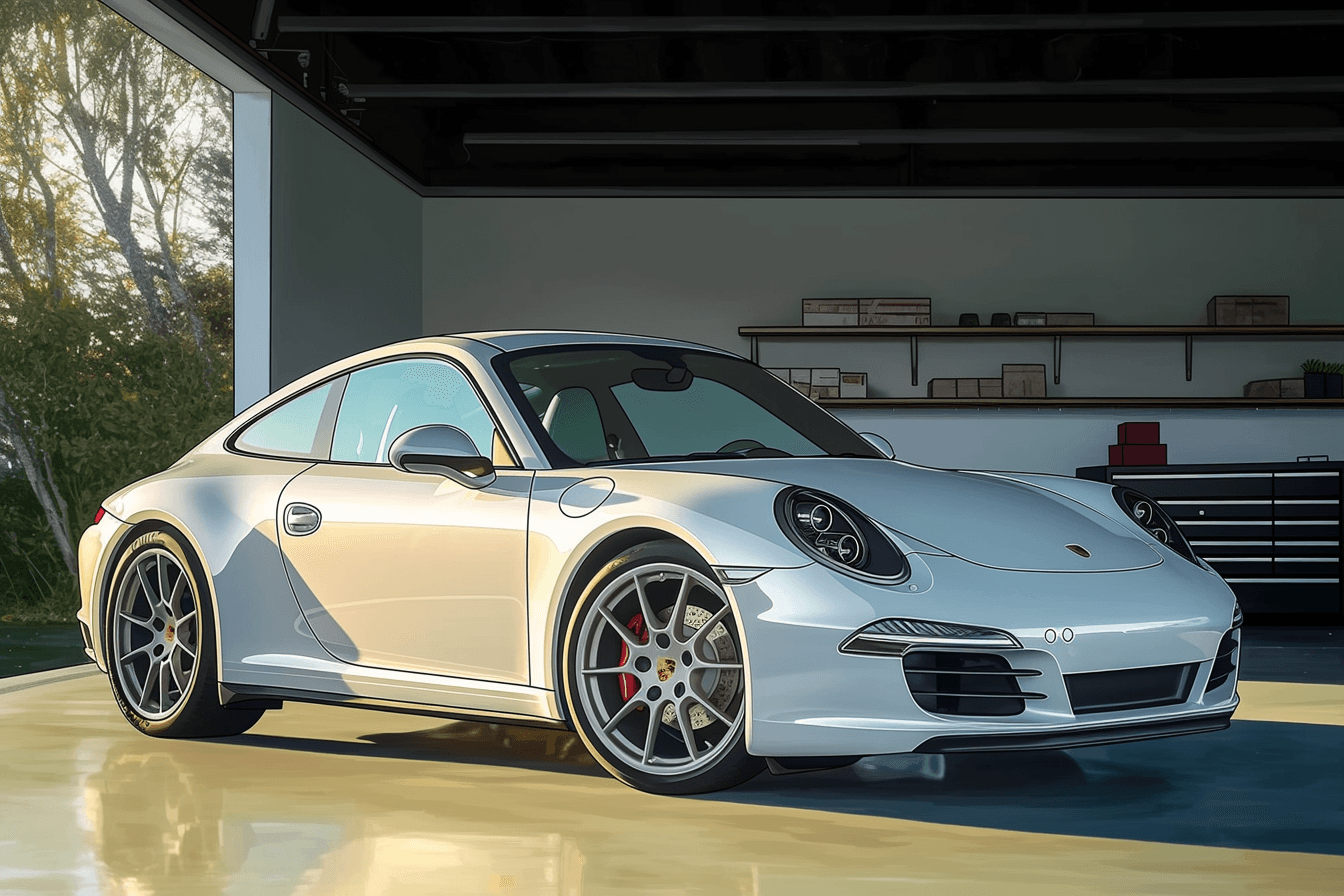
991.1 Carrera S, silver, three-quarter front view, parked in a garage
00

Overview

Production
2012–2016
Chassis code
991.1
Layout
Rear-engine, RWD/AWD
Engine code
9A1-family DFI
Power
395 hp @ 7,400 rpm
Transmission
7MT or 7-speed PDK

Known-issue mix

  • 7Watch
  • 1Clear
01

Known issues

Watch

Bore scoring — sources disagree on whether it's a real risk here

Worth stating plainly rather than picking a side: one specialist engine-parts supplier lists the 991.1's DFI engine family as theoretically susceptible to bore scoring — the same underlying mechanism seen on the 997.2 — while other technical sources report no confirmed real-world cases on the 991.1 specifically, describing the risk as effectively resolved by this point in Porsche's engine evolution. Unlike the 997.2, where a real documented case exists, this research pass did not turn up a confirmed 991.1 case. Treat this as a lower-probability watch item than on the 997.2 — worth a borescope check for peace of mind, not something to be alarmed about.

What to check

  • Get a borescope inspection of the cylinder bores during PPI as routine due diligence — a clean result costs little and settles a genuinely open question
  • Cold start the car yourself and listen for excessive piston slap or rattle that clears within ~30 seconds
Watch

Air-oil separator (AOS) failure

The AOS is more of a wear part than a rare failure on this generation — common enough past 100,000 miles that many owners and specialists treat replacement as close to routine maintenance rather than a red flag. Replacement is relatively inexpensive, roughly $400–700 in parts.

What to check

  • Watch for blue smoke at cold start and listen for a rough idle
  • Ask about oil consumption between changes, especially on higher-mileage cars
  • Ask whether the AOS has already been replaced, and at what mileage
Watch

Changeover valve (COV) fault codes

Multiple stored changeover-valve fault codes indicate ongoing valve failures rather than a one-off glitch, so this is worth a dedicated diagnostic scan rather than assuming a clean dash means a clean system.

What to check

  • Request a full diagnostic scan specifically checking for changeover-valve fault codes during PPI
  • Ask whether any COV-related codes have appeared in prior service history, even if since cleared
Watch

Exhaust tailpipe fracture risk — service campaign (2012–2013)

A factory service campaign addressing a tailpipe fracture risk on standard-exhaust 2012–2013 Carrera and Carrera 4 models. Not every car in this build window is necessarily still affected if the campaign has already been completed, but it's a quick, free VIN check worth doing before you buy.

What to check

  • Check the car's build date/VIN against Porsche's service-campaign records for the 2012–2013 exhaust tailpipe fracture campaign
  • Confirm completion in writing rather than taking a seller's word for it
Watch

Front hood lock bracket replacement — service campaign (2014–2015)

A factory service campaign covering the front hood lock bracket on 2014–2015 model year cars. Like the exhaust campaign, this is a free VIN check worth running regardless of how clean the car looks.

What to check

  • Check the car's VIN against Porsche's service-campaign records for the 2014–2015 hood lock bracket campaign
  • Confirm completion in writing rather than taking a seller's word for it
Watch

Takata airbag inflator recall

The Takata inflator recall is an industry-wide safety issue that affected many manufacturers, not something specific to Porsche or this platform — but it's still a safety-relevant open recall worth ruling out before buying, since a defective inflator is a real injury risk in a crash.

What to check

  • Run the VIN through Porsche's official recall lookup tool to confirm Takata airbag completion status
  • Don't accept a seller's assurance alone — get documented confirmation
Watch

Rear main seal concerns

Same wear-item profile seen on the 997.2 and other recent generations: the rear main seal can weep oil over time. It's not a design flaw specific to this generation, and rarely a deal-breaker on its own, but easy to check for and worth confirming before you buy.

What to check

  • Inspect the rear main seal area — the engine/transmission junction — for oil seepage
  • Ask about any oil spots left under the car when it's parked
Clear

No dominant, well-documented trim-specific failure pattern

With no strongly documented catastrophic mechanical weak point on this generation, negotiation leverage comes mostly from standard PPI findings (brakes, tires, clutch if manual, suspension wear), confirming recall/service-campaign completion, and a clean diagnostic scan for changeover-valve fault codes — not a major engine-risk discount the way older M96/M97-engined Porsches carry.

What to check

  • Treat this as a standard, thorough PPI rather than one targeting a known trim-specific failure
  • Review the platform-wide watch items (bore scoring, AOS, changeover valve, recalls, rear main seal) as your checklist baseline
02

Market pricing context

Typical asking price
$55,000 – $115,000
clean, good-condition examples, PDK or manual

Average sale price sits around $84,300, with manual coupes averaging slightly higher (~$87,000) — a modest but real premium, consistent with buyer forum sentiment that manual cars are harder to find on this generation. A 2011 manual example sold for $43,500 in May 2022, and a recorded low of $32,501 was reached by a 2013 cabriolet in October 2024 — treat both as floor outliers, not shopping targets. The recorded high, $318,500 for a 2013 "Club Coupe" limited/special edition in January 2026, is a clear collector-market outlier and not representative of a typical example. Manually curated from public sale-price aggregators, cross-checked against enthusiast/owner forum discussion — refresh periodically rather than treating as current-day pricing.

As of August 2026 — written market commentary, not live pricing data

Price range

Shaded band = typical range shown above · marker = average sale

$84,260Average
$32,501Record low · 2013 model year cabriolet, October 2024 sale
$318,500Record high · 2013 model year "Club Coupe" limited/special edition, January 2026 sale — a collector-market outlier
03

Popular options

7-speed manual transmission

The Carrera S is the most popular 911 variant globally, and manual cars specifically are harder to find on this generation with real buyer demand behind them — forum buyers report struggling to find good manual examples. Pricing data shows a modest real premium for manual coupes over the overall trim average, though it's not dramatic.

Popular

Sport Chrono Package

Named specifically as one of several "very popular equipment options" in enthusiast community discussion of this generation's option list. Adds Sport/Sport Plus drive modes and launch control on PDK cars.

Popular

PCCB (Porsche Ceramic Composite Brakes)

Availability and specification varies by model and market — a genuine but uncommon option on Carrera S examples. Confirm what a specific car actually has rather than assuming from the trim alone.

Rare

This generation's option list is more sparsely documented in what we found than the 981/997.2 lists — deliberately kept shorter rather than padded with plausible-sounding but unverified items. Rear-axle steering and PASM Sport both exist on the 991 platform generally, but source material didn't clearly confirm availability specifically on the Carrera S trim as opposed to Turbo/GT variants, so they're left out until confirmed rather than guessed at.

04

Buying checklist

Documents to request

  • VIN-based recall/service-campaign confirmation from Porsche — exhaust tailpipe fracture (2012–13), hood lock bracket (2014–15), and Takata airbag inflator
  • Full service history — independent Porsche specialist or OPC (official Porsche Centre) records preferred over generic shop records

Questions for the seller

  • Have all recall and service campaigns been completed — specifically exhaust tailpipe fracture, hood lock bracket, and Takata airbag?
  • Any history of oil consumption, blue smoke at cold start, or rough idle?
  • Any oil spots under the car, particularly near the engine/gearbox junction?
  • Manual or PDK? Manual cars are harder to find on this generation with real buyer demand behind them, and command a modest but real price premium.

PPI advice

  • Request a full diagnostic scan for changeover valve (COV) fault codes
  • Get a borescope inspection of the cylinders as routine due diligence — bore-scoring evidence for this generation is thin, but a clean result costs little and settles the question
  • Check for AOS-related symptoms: oil consumption, blue smoke at cold start, rough idle
  • Inspect the rear main seal area for oil seepage
  • Use a shop that specializes in Porsche, not a generic mechanic