
STATWERKS

Free, no login

Every model dashboard is free to read — known issues, pricing context, and a buying checklist, no account required.

Browse dashboards →
991.1

991.1 Carrera

2012–2016 · 2dr coupe / cabriolet

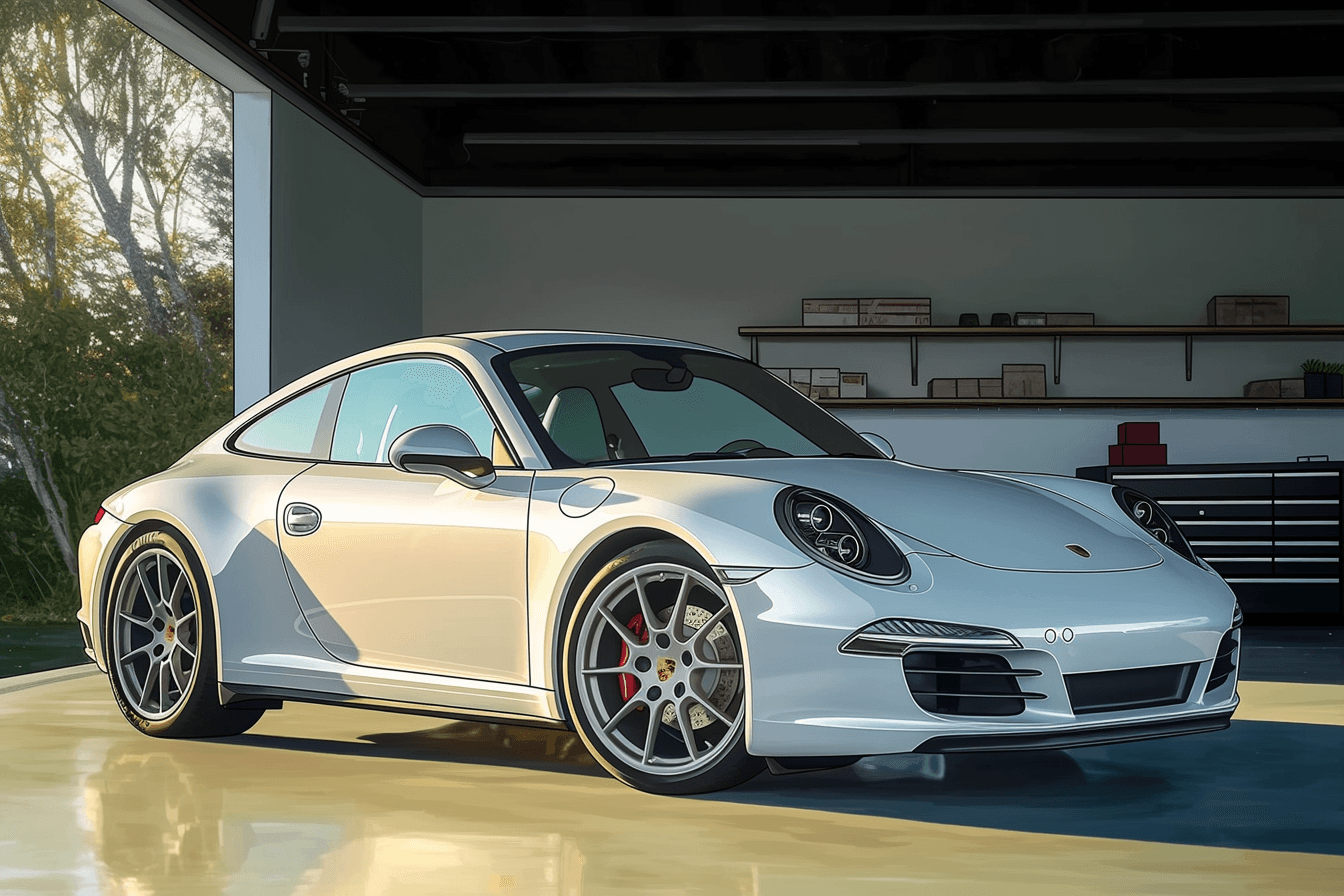
The 991.1 is an all-new platform, not a facelift of the 997 — a longer wheelbase, wider track, and a significant refinement step forward: more spacious, more modern electronics (PCM, driver-assist features), and generally excellent build quality. It's naturally aspirated across the whole Carrera range, with turbocharging arriving only in the following 991.2. Introduced for the 2012 model year and replaced by the turbocharged 991.2 for 2017, this generation is widely regarded as a major refinement over the 997 — and the Carrera S from this generation is, per market data, the most popular 911 variant globally. Every 991.1 Carrera shares the same recall/service-campaign history, AOS wear pattern, and changeover-valve behavior regardless of trim — engine-displacement-specific detail lives on each trim's own page.

A silver 991.1 Carrera and a red 991.1 GT3 parked side by side on a rooftop under a blue sky
00

Overview

Production
2012–2016
Chassis code
991.1
Layout
Rear-engine, RWD/AWD
01

Choose a trim

02

Known across every trim

These apply platform-wide, regardless of trim. Each trim's own dashboard adds anything specific to that engine/spec variant.

Watch

Bore scoring — sources disagree on whether it's a real risk here

Worth stating plainly rather than picking a side: one specialist engine-parts supplier lists the 991.1's DFI engine family as theoretically susceptible to bore scoring — the same underlying mechanism seen on the 997.2 — while other technical sources report no confirmed real-world cases on the 991.1 specifically, describing the risk as effectively resolved by this point in Porsche's engine evolution. Unlike the 997.2, where a real documented case exists, this research pass did not turn up a confirmed 991.1 case. Treat this as a lower-probability watch item than on the 997.2 — worth a borescope check for peace of mind, not something to be alarmed about.

What to check

  • Get a borescope inspection of the cylinder bores during PPI as routine due diligence — a clean result costs little and settles a genuinely open question
  • Cold start the car yourself and listen for excessive piston slap or rattle that clears within ~30 seconds
Watch

Air-oil separator (AOS) failure

The AOS is more of a wear part than a rare failure on this generation — common enough past 100,000 miles that many owners and specialists treat replacement as close to routine maintenance rather than a red flag. Replacement is relatively inexpensive, roughly $400–700 in parts.

What to check

  • Watch for blue smoke at cold start and listen for a rough idle
  • Ask about oil consumption between changes, especially on higher-mileage cars
  • Ask whether the AOS has already been replaced, and at what mileage
Watch

Changeover valve (COV) fault codes

Multiple stored changeover-valve fault codes indicate ongoing valve failures rather than a one-off glitch, so this is worth a dedicated diagnostic scan rather than assuming a clean dash means a clean system.

What to check

  • Request a full diagnostic scan specifically checking for changeover-valve fault codes during PPI
  • Ask whether any COV-related codes have appeared in prior service history, even if since cleared
Watch

Exhaust tailpipe fracture risk — service campaign (2012–2013)

A factory service campaign addressing a tailpipe fracture risk on standard-exhaust 2012–2013 Carrera and Carrera 4 models. Not every car in this build window is necessarily still affected if the campaign has already been completed, but it's a quick, free VIN check worth doing before you buy.

What to check

  • Check the car's build date/VIN against Porsche's service-campaign records for the 2012–2013 exhaust tailpipe fracture campaign
  • Confirm completion in writing rather than taking a seller's word for it
Watch

Front hood lock bracket replacement — service campaign (2014–2015)

A factory service campaign covering the front hood lock bracket on 2014–2015 model year cars. Like the exhaust campaign, this is a free VIN check worth running regardless of how clean the car looks.

What to check

  • Check the car's VIN against Porsche's service-campaign records for the 2014–2015 hood lock bracket campaign
  • Confirm completion in writing rather than taking a seller's word for it
Watch

Takata airbag inflator recall

The Takata inflator recall is an industry-wide safety issue that affected many manufacturers, not something specific to Porsche or this platform — but it's still a safety-relevant open recall worth ruling out before buying, since a defective inflator is a real injury risk in a crash.

What to check

  • Run the VIN through Porsche's official recall lookup tool to confirm Takata airbag completion status
  • Don't accept a seller's assurance alone — get documented confirmation
Watch

Rear main seal concerns

Same wear-item profile seen on the 997.2 and other recent generations: the rear main seal can weep oil over time. It's not a design flaw specific to this generation, and rarely a deal-breaker on its own, but easy to check for and worth confirming before you buy.

What to check

  • Inspect the rear main seal area — the engine/transmission junction — for oil seepage
  • Ask about any oil spots left under the car when it's parked