STATWERKS

Free, no login

Every model dashboard is free to read — known issues, pricing context, and a buying checklist, no account required.

Browse dashboards →
996

996 Carrera

1999–2004 · 2dr coupe / cabriolet

The base Carrera across the full 996 run — both the original 996.1 (1999–2001, 3.4L) and the 2002 facelift 996.2 (3.6L, revised headlights). It's the entry point to 911 ownership by price on this site: 996 Carrera pricing sits well below every later generation covered here, largely a function of age and the IMS bearing's reputation rather than the car being materially less capable. There's no separate "Carrera S" trim on this generation to compare against — that badge, and the distinct engine/bearing questions that can come with it on later cars, arrived with the 997. Within the 996, bearing generation tracks model year and engine revision, not trim.

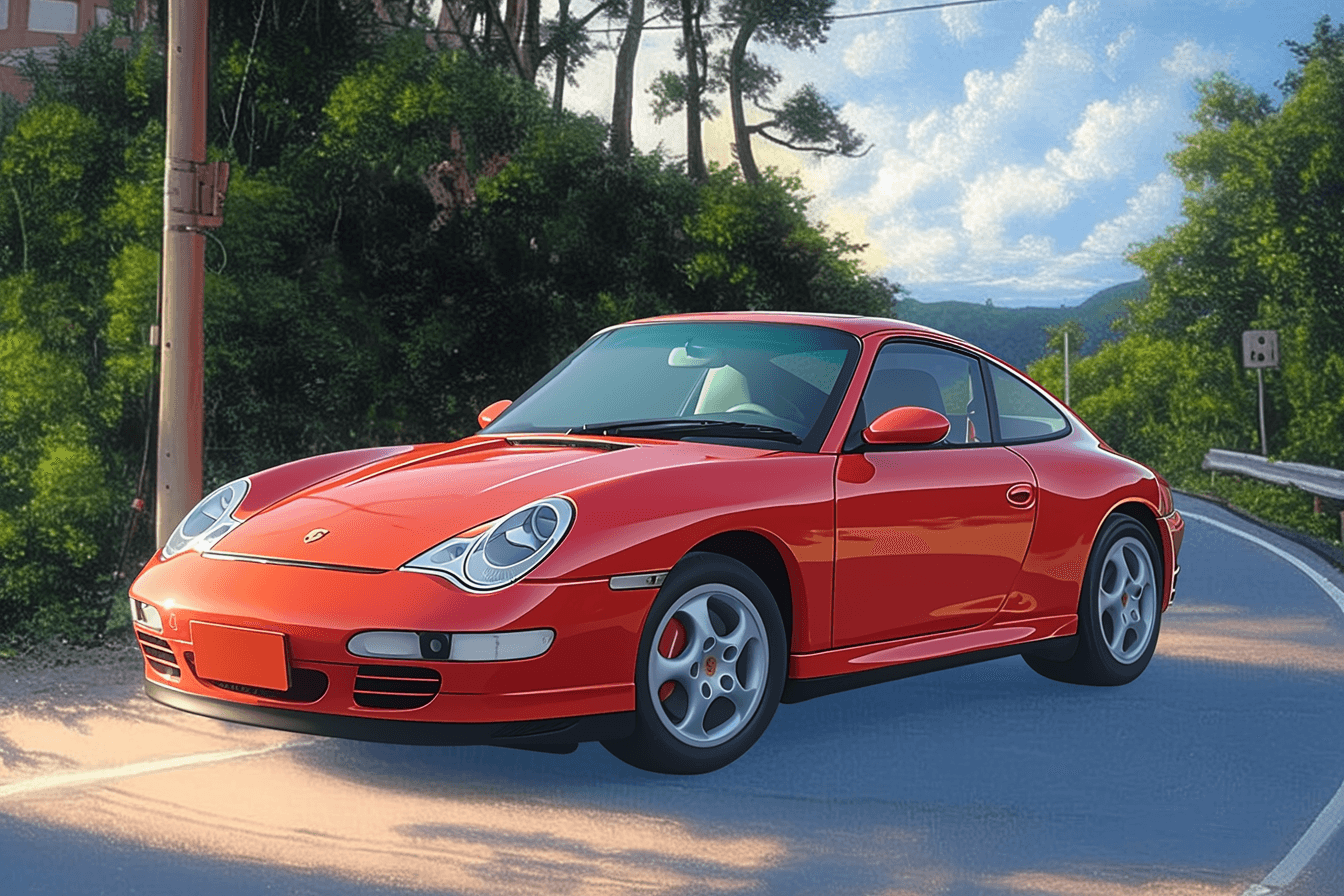
996 Carrera, red, three-quarter front view, on a mountain road
00

Overview

Production
1999–2004
Chassis code
996
Layout
Rear-engine, RWD
Engine code
M96 (3.4L 1999–2001; 3.6L 2002–2004)
Power
296–320 hp depending on model year
Transmission
6MT or Tiptronic S
Curb weight
~2,900–3,080 lb depending on model year/transmission

Known-issue mix

  • 6Watch
  • 1Clear
01

Known issues

Watch

IMS (intermediate shaft) bearing failure

The M96 engine's intermediate shaft runs on a bearing that can fail catastrophically with no warning. Design changed across the production run: early cars (roughly 1999–2000) used a dual-row bearing with a cited failure rate around 1–2%; from roughly 2000/2001 onward, a single-row 6204 bearing was used, with a cited failure rate closer to 8% (up to 10% by some warranty-period data). Sources disagree on the exact model-year cutoff for this transition — don't rely on model year alone; LN Engineering publishes an engine-serial-number-based bearing identification lookup that's the more reliable way to confirm which bearing generation a specific car has. Those failure-rate percentages come from warranty-period data only, and real-world lifetime failure rate outside the warranty window is believed to run meaningfully higher. Cost of a catastrophic failure varies widely by shop and what's found — figures cited range from roughly $8,000–$20,000 for a repair/rebuild, up to $40,000+ if the engine is destroyed beyond economical rebuild. Preventive replacement is far cheaper: LN Engineering's IMS Retrofit kit runs under $1,000 in parts (roughly $2,000–$3,500 all-in with labor), and the IMS Solution kit (a more thorough fix) runs under $2,000 in parts; the job takes 10–14 hours of labor either way. Don't reject a 996 outright for an unaddressed bearing — budget for the retrofit and prioritize cars with documented replacement.

What to check

  • Ask for documentation (receipts, invoice) of any prior IMS bearing retrofit or replacement — don't take a seller's word alone
  • If undocumented, have a specialist confirm the bearing generation via engine serial number, not model year alone
  • Budget roughly $2,000–$3,500 for a preventive retrofit if none has been done, and factor that into your offer
Watch

Rear main seal (RMS) leaks

Porsche redesigned the rear main seal a number of times across the 996's production, improving but never fully solving the leak. A revised flange/seal for the intermediate shaft bearing area arrived by roughly model-year 2002, but the older-style seal wasn't used consistently even after that point. In the field, RMS leaks and intermediate-shaft-flange leaks get conflated — proper diagnosis matters before assuming which is actually leaking. Because addressing either requires separating the engine and transmission, RMS replacement is commonly bundled into an IMS retrofit job rather than done on its own.

What to check

  • Inspect the rear main seal / engine-transmission junction area for oil seepage
  • Ask about any oil spots left under the car when parked, and how long it typically sits between drives
  • If an IMS retrofit is being planned anyway, ask about bundling an RMS replacement into the same job
Watch

Bore scoring — real on the M96, but the strongest documentation ties to later/higher-output engines

The M96's open-deck crankcase design runs hotter on one bank, and the Alusil/Lokasil aluminum-silicon cylinder coating can deteriorate over time; resulting particles get trapped between piston and bore, causing scoring. Repairing bore scoring alone runs roughly $5,000–$6,000, and it's often bundled into a full engine rebuild running $15,000–$30,000+. One source specifically attributes bore scoring more to the 3.8L M97 engine used in the later 997.1 Carrera S/4S (and some late 996 GT3 engines) than to the base 996 Carrera's smaller-displacement M96 — a real disagreement in how the sourcing frames this risk. Treat bore scoring as a documented M96-family risk worth checking for, not as a base-Carrera-specific certainty at the same rate cited for later, higher-output engines.

What to check

  • Get a borescope inspection of the cylinder bores during PPI
  • Cold start the car yourself and listen for excessive piston slap or rattle that clears within ~30 seconds
  • Ask about oil-change frequency and whether the car has regularly been driven hard on a cold engine
Watch

"D-chunk" cylinder liner failure — rare, catastrophic, concentrated on early engines

Porsche cast the M96's cylinder liners directly into the engine case using an insert-mold process, with the liners "floating" in a coolant-filled area. Vibration and twisting during normal operation can crack the liner, almost exclusively in the two middle cylinders, with a section ("the D-chunk") breaking off. One source ties this mostly to the smaller-displacement early engines (Boxster 2.5L and the 996.1's 3.4L Carrera), suggesting it's more a concern on 1999–2001 cars than the 2002+ facelift's 3.6L — this wasn't independently cross-confirmed by a second source. Counterintuitively, it's reported as occurring mostly on gently-driven cars rather than track-driven ones. Rare, but a confirmed case typically means the engine needs to come apart for a liner repair.

What to check

  • No specific pre-purchase test exists for this — it's a rare failure that doesn't reliably show warning signs beforehand
  • Ask about the car's use history and how it's typically been driven
  • Treat as a small residual risk on early (1999–2001) 3.4L cars specifically, not a reason to avoid the platform
Watch

Coolant pipe / connection failures

Porsche's factory coolant pipe joints (six to eight per engine) are glued rather than welded, and can fail eventually under normal use; a specific sub-issue involves molded plastic coolant elbow pipes to the oil cooler/heat exchanger with thin walls at the O-ring seal groove that crack over time and mileage. Unlike IMS and RMS, this isn't limited to the oldest examples — it's described as an ongoing risk across the platform's life, and ignoring a leak risks overheating and serious engine damage. Common fixes range from "pinning" a leaking joint as a cheap patch, to replacing the plastic elbows with aftermarket metal coolant pipes as a preventive upgrade.

What to check

  • Check the cooling system for leaks or evidence of prior repairs, including at pipe joints and the oil-cooler elbow
  • Ask whether any coolant pipes have been replaced (factory plastic vs. aftermarket metal) and when
  • Don't assume a leak-free car today stays that way — this is presented as an ongoing wear item, not a fix-once-and-done job
Watch

Headlight adjustment screw cover recall

NHTSA campaign 22V-656 (Porsche internal code ANB4) addressed a missing cover over a headlight adjustment screw, with owner notification beginning October 2022. This campaign covers a large multi-model, multi-year Porsche population, not just the 996, so confirm applicability to a specific VIN rather than assuming. Research for this platform could not retrieve a full itemized recall list beyond this campaign (page access was blocked) — run an independent VIN-based NHTSA lookup for any specific car under consideration rather than treating this as the complete recall history.

What to check

  • Run the VIN through NHTSA's recall lookup to confirm completion of campaign 22V-656, if applicable
  • Don't assume this is the only recall that applies — do a fresh VIN-based lookup rather than relying on this list alone
Clear

No distinct "S" IMS bearing variant to compare against

It's an easy assumption to carry over from later generations, where a base-vs-S engine/bearing comparison sometimes matters: the 996 doesn't have that distinction. The closest AWD analog, the widebody Carrera 4S (2002–2005), uses the same naturally-aspirated M96 engine family as this base Carrera, not a different or uprated bearing. Base, Carrera 4, and Carrera 4S all share whichever IMS bearing generation applies to their specific model year — see the platform's known-issues list for that year-based (not trim-based) breakdown.

What to check

  • Don't assume a base-vs-S bearing distinction on this generation the way you might on a later 911 — verify bearing generation by engine serial number regardless of trim
02

Market pricing context

Typical asking price
$20,000 – $42,000
clean, good-condition manual coupes across both 996.1 and 996.2

The cheapest entry point into 911 ownership covered on this site. Pricing splits meaningfully by sub-generation and transmission: 996.1 (1999–2001) coupes average around $27,300 across all transmissions ($29,800 manual / $23,400 automatic), while 996.2 (2002–2004) manual coupes average closer to $31,000–$31,200 depending on the data pull. Cars in the 30,000–60,000 mile range typically ask $20,000–$30,000; sub-10,000-mile survivor examples can exceed $80,000. One separately-cited figure claimed a $45,697 average reflecting 40% year-over-year auction growth — notably higher than the classic.com per-trim averages above, likely a different (auction-only or broader-model) dataset rather than a directly comparable number, so it's flagged here rather than blended in. Manually curated from classic.com aggregate sale data via web search — refresh periodically, and treat as directional rather than a live feed.

As of August 2026 — written market commentary, not live pricing data

Price range

Shaded band = typical range shown above · marker = average sale

$29,000Average
$7,770Record low · 1997 model year Carrera 2 coupe, manual, September 2021 sale — the model year and "Carrera 2" designation suggest this may be a Euro-market or pre-US-launch car rather than a typical US example; treat as an extreme low-end outlier, not a shopping target
$85,000Record high · 2004 model year (996.2) coupe, manual, August 18, 2022 sale
03

Popular options

X51 Power Kit

A factory power-upgrade package, named as the most sought-after performance option on this generation in specialist buying-guide discussion. Genuinely uncommon — a strong find rather than something to expect or hold out for.

Rare

6-speed manual transmission

Explicitly documented as commanding a real price premium over Tiptronic in the resale market on this generation — consistent with the manual-vs-automatic pricing gap shown in market data (manual coupe averages running several thousand dollars above automatic).

Popular

M030 Sport Suspension

A lowered, firmer factory suspension tune, named among the desirable factory specs to look for on this generation.

Popular

Limited-slip differential

Named as a desirable factory option in specialist buying-guide discussion, alongside M030 and the X51 kit.

Popular

Aerokit (GT2-style front spoiler/rear wing)

A styling package borrowing GT3-derived front spoiler, rear wing, and revised bumpers/side skirts. Specifically called out in specialist marketplace listings as a desirable, uncommon factory spec.

Rare

Sport seats

More bolstered factory seating, valued for both comfort and appearance — named among the desirable options for this generation.

Popular

Hi-Fi Sound Package (10-speaker amplified system)

A factory audio upgrade named in buying-guide discussion — a nice-to-have rather than a major value driver.

Standard

This list leans on a single Rennlist buying-guide thread and marketplace listing patterns rather than a broader cross-referenced source set — treat individual option desirability as directional, not definitive, and confirm what a specific car actually has rather than assuming from the trim alone.

04

Buying checklist

Documents to request

  • Full service history — independent Porsche specialist records preferred over generic shop records
  • Documentation of any IMS bearing retrofit, replacement, or inspection — receipts/invoices, not just a seller's claim
  • VIN-based recall confirmation from NHTSA
  • Title history / accident or salvage check (Carfax or equivalent)

Questions for the seller

  • Has the IMS bearing been inspected, retrofitted, or replaced? Do you have documentation?
  • Any history of coolant loss, overheating, or pipe/joint repairs?
  • Any oil spots under the car, particularly near the engine/gearbox junction?
  • Has a pre-purchase inspection ever been done, and can you share the results?
  • Manual or Tiptronic? Manual cars command a real, documented premium in the used market on this generation.

PPI advice

  • Confirm IMS bearing generation via engine serial number, not model year alone, if no retrofit documentation exists
  • Get a borescope inspection of the cylinder bores during PPI
  • Check the cooling system thoroughly, including pipe joints and the oil-cooler elbow
  • Inspect the rear main seal area for oil seepage
  • Use a shop that specializes in Porsche, and ideally has specific 996/M96 experience
  • Budget for a preventive IMS retrofit (~$2,000–$3,500) in your offer if the car doesn't already have documented work