
STATWERKS

Free, no login

Every model dashboard is free to read — known issues, pricing context, and a buying checklist, no account required.

Browse dashboards →
718

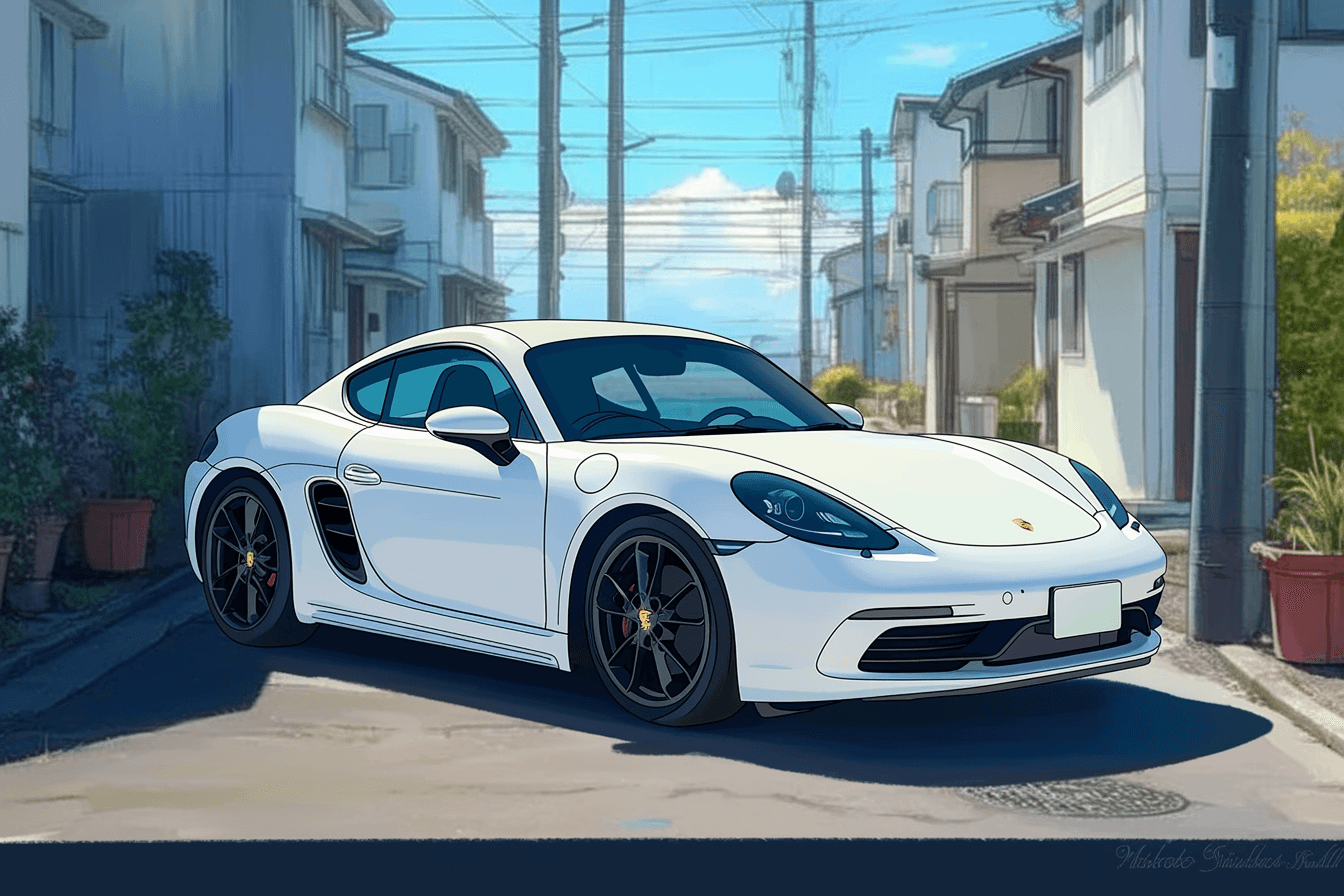
718 Cayman

2017–2025 · 2dr coupe

The 982-chassis Cayman switched from the naturally-aspirated flat-six engines of every prior generation to turbocharged flat-fours, and Porsche revived the "718" name (from the 1959/1960 Targa Florio-winning car) for the marketing badge — 982 is the actual internal chassis designation. Production ran through October 2025, making this the final and most recent generation covered on this site so far. The upside for buyers coming from IMS-bearing-era research: the MA2-family turbo four has no intermediate shaft at all, so that risk simply doesn't exist here. The tradeoff is a newer set of turbo- and DI-specific wear items instead — none of them approaching IMS-bearing-scale catastrophic risk, but worth knowing regardless of which trim you're shopping.

Image pending718 Cayman — image not yet added
00

Overview

Production
2017–2025
Chassis code
982 (marketed as "718")
Layout
Mid-engine, RWD
01

Choose a trim

02

Known across every trim

These apply platform-wide, regardless of trim. Each trim's own dashboard adds anything specific to that engine/spec variant.

Critical

Multiple safety recalls (build-window specific — confirm via VIN)

These are three distinct recalls, not one — confirm all applicable ones via VIN rather than assuming any single fix covers everything. (1) Fuel collection pipe screws (2017 models, Porsche campaign AH01, began March 27, 2017): screws fastening fuel collection pipes in the engine bay could shear, risking a fuel leak or fire. (2) Luggage compartment bracket/crossmember (2017–2019 718 Cayman and Cayman S, began April 19, 2019): a crossmember could detach from the luggage bracket in a crash, risking a fuel leak or fire; dealers added rivets to secure it. (3) Side airbag impact sensors (2018 718 Cayman, Cayman S, and Cayman GTS, began May 17, 2019): sensors possibly not torqued to spec, risking non-deployment in a crash. All three are corroborated across multiple aggregator sources, though this research pass couldn't retrieve the underlying NHTSA campaign pages directly beyond confirming campaign AH01 by name.

What to check

  • Run the VIN through NHTSA's recall lookup to confirm completion of all three campaigns, if the build date/model year falls in an affected window
  • Don't take a seller's word for it — get documented confirmation of recall completion for each
  • Treat these as non-negotiable safety items regardless of how clean the car is otherwise
Watch

Wastegate actuator rattle / turbo replacement

The turbo's low mounting position exposes the wastegate actuator arm to water and road debris, and corrosion-driven play in the linkage produces a metallic buzzing or rattle. Porsche's fix is full turbo assembly replacement with an updated housing; many cases were reportedly covered under warranty on earlier cars. Most sourcing found for this issue specifically names the base 2.0L's simpler fixed-geometry, internally-wastegated turbo — it's not clearly confirmed whether the S's different variable-turbine-geometry turbo shares the same exposure (see this trim's own known-issues entry for that nuance).

What to check

  • Listen for a metallic buzzing or rattling noise from the engine bay, especially under boost
  • Ask whether the turbo assembly has ever been replaced, and whether it was covered under warranty
Watch

Air-Oil Separator (AOS) failure

Symptoms include white smoke on cold startup, a rough idle, and oil finding its way into the intake tract/throttle body; a failing AOS lets crankcase vacuum run abnormally high. Some specialists recommend proactive replacement on a roughly 6-year/75,000-mile interval regardless of symptoms, since a failed AOS can also contribute to rear main seal issues if left unaddressed.

What to check

  • Cold start the car yourself and watch for smoke or a rough idle
  • Ask about AOS replacement history and mileage/age since the last service
Watch

Coolant reservoir and water pump issues

A failing coolant reservoir shows as a low-coolant warning, a "sweet smell" from the rear of the car, and pink fluid leaks; repair is consistently described as a major job requiring engine removal, though no specific dollar figure turned up in this research pass. Separately, the water pump itself (bearing wear, plastic impeller degradation) and the electronic thermostat (which can fail open) are flagged as recurring weak points. Treat these as two related items worth checking during PPI, not one.

What to check

  • Check for a low-coolant warning light, coolant smell, or visible leaks (especially pink fluid) near the rear of the car
  • Ask about water pump and thermostat service history
  • Confirm the car reaches and holds normal operating temperature during the test drive
Watch

Direct-injection intake valve carbon buildup

Because direct injection sprays fuel straight into the cylinder rather than across the intake valves, there's nothing washing carbon deposits off the back of the valves the way port injection does. One source flags this becoming noticeable somewhere in the 80,000–120,000 km range. The fix is a walnut-blasting service — a few hundred dollars, and not urgent unless it's causing a rough idle or misfire.

What to check

  • Ask about any history of rough idle, hesitation, or misfire
  • Not typically worth a proactive walnut-blast unless symptoms are present
Watch

Headlight/taillight UV coating delamination

Described as a known, carried-over complaint from the 981 generation that Porsche hasn't fully eliminated on the 982. Cosmetic rather than functional in most cases, but worth a visual check, and specialists can address moisture ingress if present.

What to check

  • Visually inspect headlight and taillight housings for cloudiness, delamination, or visible moisture inside the housing
Clear

IMS bearing — not applicable to this generation

Worth stating explicitly since IMS bearing concerns are usually the first thing buyers researching any water-cooled Porsche ask about. The 982's turbocharged flat-four engines (both the base 2.0L and the S's 2.5L) have no intermediate shaft in the design at all — there's nothing here to fail in that way.

What to check

  • None needed — if a seller or shop tries to sell you an "IMS inspection" on a 718, that's a red flag about them, not the car
Clear

Connecting rod recall — does not apply to turbocharged models

In March/May 2021, Porsche recalled 190 units of the 2021 718 Spyder, Cayman GT4, and Boxster/Cayman GTS 4.0 for connecting rods from an out-of-spec supplier batch that could crack and cause engine damage, stalling, or an oil leak; Porsche replaced engines on affected cars free of charge. This recall is specific to the naturally-aspirated 9A2 4.0L flat-six used in those models — it does not touch the turbocharged 2.0L or 2.5L engines used in the base Cayman and Cayman S. Worth stating explicitly since it's easy to see "718 recall" headlines and assume it applies generation-wide.

What to check

  • None needed for base/S turbo models — if shopping a GTS 4.0, GT4, or Spyder, confirm this recall's completion via VIN instead