
STATWERKS

Free, no login

Every model dashboard is free to read — known issues, pricing context, and a buying checklist, no account required.

Browse dashboards →
981

981 Cayman

2013–2016 · 2dr coupe

Launched in Europe in late 2013 (U.S. model years run 2014–2016), the 981 was a meaningful step up from the 987 in chassis stiffness, styling, and interior quality — the first Cayman generation with styling distinct from its Boxster sibling, even though the two share the same platform. It's widely regarded by the enthusiast community as one of the best-driving Caymans, with generally strong reliability by Porsche standards, before giving way to the turbocharged 718 Cayman (982) in 2017. Every 981 Cayman shares the same platform-wide wear items below regardless of trim — engine-specific detail lives on each trim's own page.

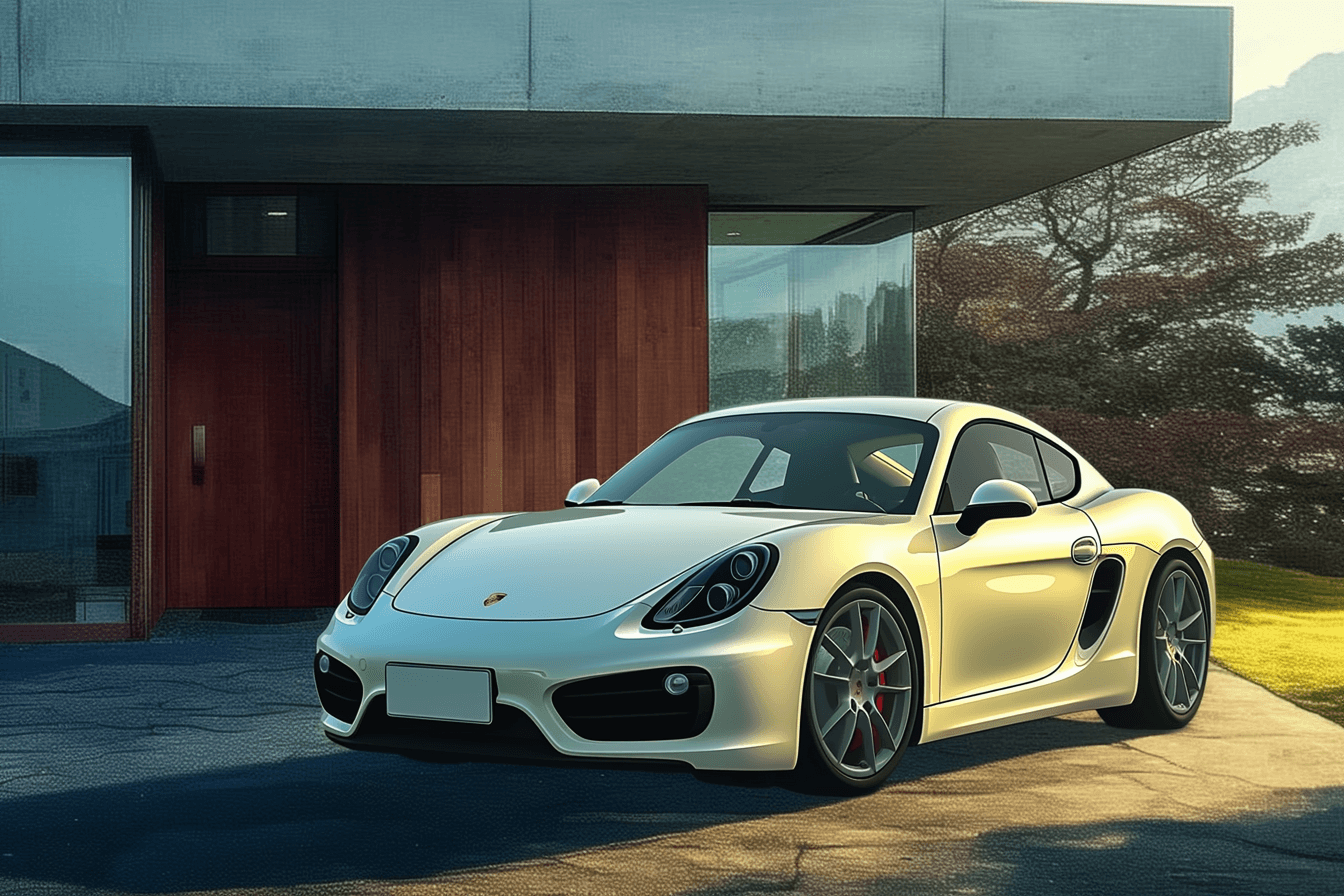
Two 981 Cayman S cars, silver and red, parked in front of a modern house at dusk
00

Overview

Production
2012–2016
Chassis code
981
Layout
Mid-engine, RWD
01

Choose a trim

02

Known across every trim

These apply platform-wide, regardless of trim. Each trim's own dashboard adds anything specific to that engine/spec variant.

Critical

Front bonnet (frunk) catch recall — narrow build window

A narrow production window — May 5 to June 6, 2014 — is affected by a bonnet catch that can fail, allowing the front trunk lid to open unexpectedly at speed. If a car's build date falls in this window, confirm recall completion via VIN with a Porsche dealer before you rely on anything else about the car. This is a safety recall, not a wear item, and should be resolved (or clearly priced in) regardless of how clean the car is otherwise.

What to check

  • Check the car's build date (not just model year) against the May 5 – June 6, 2014 window
  • If in that window, run the VIN through a Porsche dealer or Porsche's recall lookup to confirm the recall has been completed
  • Don't take a seller's word for it — get documented confirmation of recall completion
Watch

PADM (Porsche Active Drivetrain Mounts) failure

PADM electronically varies engine mount stiffness — firm under load, soft at idle — on cars optioned with the feature. These mounts commonly fail with age. Before assuming a full mount replacement is needed, verify the wiring and connector first, since a bad connector can produce symptoms that mimic mount failure at a fraction of the repair cost.

What to check

  • Confirm whether the car is actually equipped with PADM before pricing this in
  • Check for PADM-related fault codes during PPI
  • Verify wiring and connector condition before accepting a quote for mount replacement
Watch

A/C condenser corrosion from debris buildup

Debris collects in the lower corners of the condenser cores and holds moisture against the aluminum fins, slowly corroding them until a refrigerant leak develops. It's climate- and parking-dependent rather than universal, but worth a visual check during PPI regardless, since a failed condenser is a real if not huge repair.

What to check

  • Visually inspect the A/C condenser's lower corners for corrosion or leaf/debris buildup during PPI
  • Confirm the A/C blows cold during the test drive
  • Ask where the car has typically been parked or driven — leafy or coastal climates raise the risk
Watch

Scattered electrical faults (fuel door actuator, PSM, infotainment)

These are best described as gremlins rather than a defect: isolated reports of fuel door actuator failure, PSM (Porsche Stability Management) faults, and infotainment quirks appear across the ownership base, but no single component stands out as a systemic weak point. Individually inexpensive to fix, but worth flushing out during a full electrical check rather than discovering them piecemeal after purchase.

What to check

  • Run a full electrical function check during PPI: fuel door release, PSM on/off and warning lights, infotainment functions
  • Note any dash warning lights that appear and clear inconsistently
Watch

Blower motor sticks after periods of inactivity

The blower motor can stick slightly after periods of inactivity and fail to spin when the HVAC is switched on. It's usually resolved by manually freeing the fan blades via the air filter box (ignition off) rather than a parts replacement, and isn't indicative of a deeper problem — just worth testing on any car that's been sitting for a while before you look at it.

What to check

  • Run the HVAC blower on all speeds during the test drive, especially if the car has been sitting
  • If it doesn't spin, ask about (or try) manually freeing the blades via the air filter box with the ignition off before assuming it needs replacement
Watch

Bore scoring — rare, but real on this engine family

Documented cases are rare relative to the IMS/bore-scoring problems that plagued older M96/M97-engined Porsches, but they do happen. Specialists differ on whether the S's larger-bore engine carries materially higher risk than the base Cayman's, and real-world case data collected on owner forums hasn't shown a clear difference between them in practice — treat that specific question as open rather than settled. A borescope inspection during PPI and a close look at oil-change history are the standard mitigations; this isn't a reason to avoid the car, but it shouldn't be dismissed as a nonissue either.

What to check

  • Get a borescope inspection of all six cylinder bores during PPI
  • Ask about oil-change frequency and whether the car has regularly been driven hard on a cold engine
  • Cold start the car yourself and listen for excessive piston slap or rattle that clears within ~30 seconds
Clear

Front/rear strut mount bushing wear

The rubber bushing above the strut dries out and fails with age and mileage, producing a low-frequency thump or knock over bumps that's most noticeable from the rear. Every car in this age bracket will eventually need this addressed — it isn't a sign of abuse — but it's worth budgeting for on a higher-mileage example rather than assuming it's included in the asking price.

What to check

  • Listen for a low-frequency thump or knock over bumps, especially from the rear
  • Ask whether strut/shock mounts have ever been replaced and at what mileage
Clear

IMS bearing — not applicable to this generation

IMS bearing failure is the defining ownership risk on 986/996 and 987.1/997.1-generation Porsches with M96/M97 engines, but the 981's direct-injection MA1-series engine doesn't have an intermediate shaft bearing at all — there's nothing here to fail in that way. Worth stating explicitly, since it's usually the first question buyers coming from an older 911 or Boxster/Cayman ask.

What to check

  • None needed — if a seller or shop tries to sell you an "IMS inspection" on a 981, that's a red flag about them, not the car